
Introduction
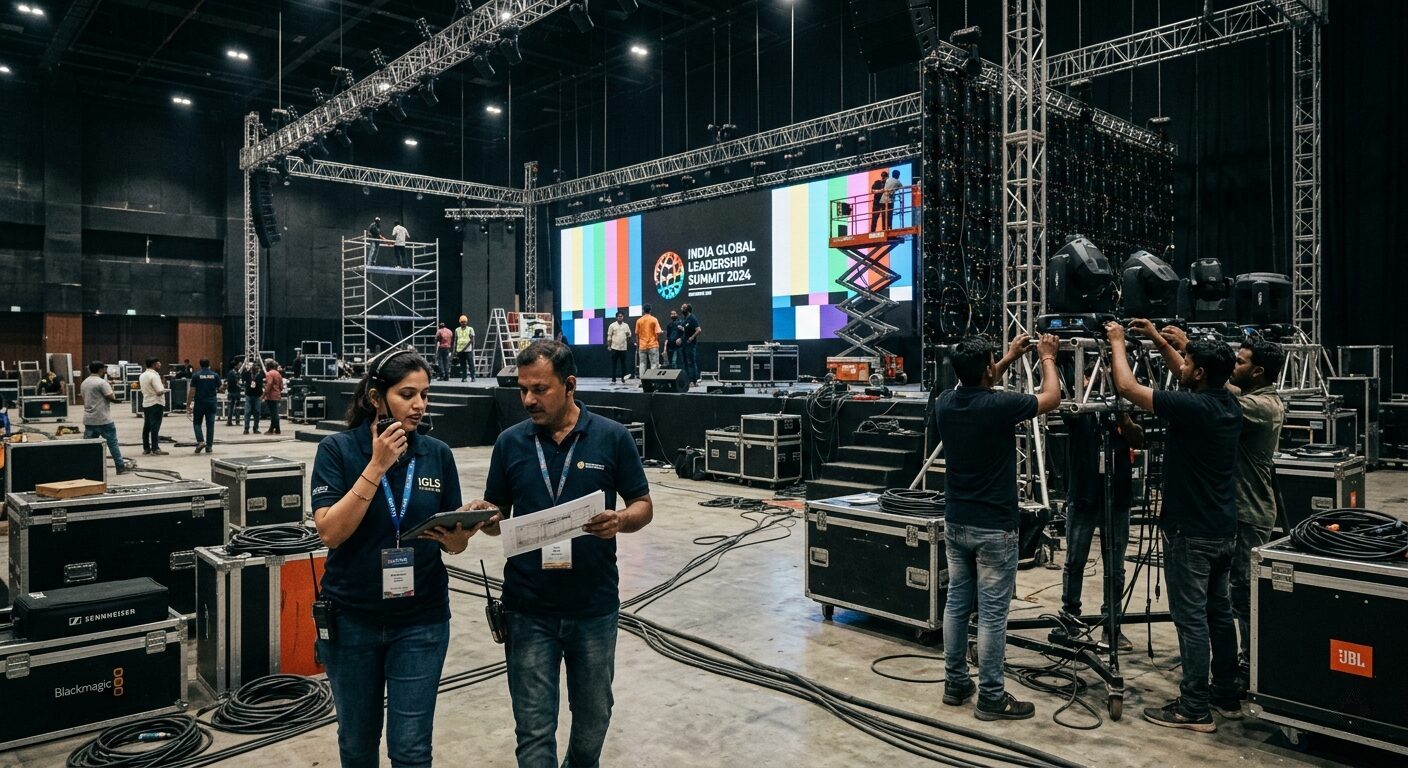
When you attend a big corporate event, everything looks perfect.
- Smooth registration
- Perfect stage setup
- Flawless presentations
But what you don’t see is the massive planning and teamwork happening behind the scenes.
From tech expos in Bangalore to business summits in Delhi and luxury brand launches in Mumbai, managing large corporate events is a complex process.
At Kaalia, after analysing event operations across India, we found how these events are actually planned and executed step by step.
1. Planning Starts Months in Advance
Big corporate events don’t happen overnight.
Timeline:
- 2–6 months of planning
- Multiple meetings
- Budget approvals
The Process:
- Understanding client goals
- Selecting venue
- Designing event concept
The Insight
Around 70% of the work happens before the event day.
2. The Role of Event Managers
Event managers are the backbone of the event.
Their Responsibilities:
- Planning
- Coordination
- Budget management
- Team handling
The Reality
They handle everything from:
👉 Small details to big decisions
3. Team Structure Behind the Event
A big event involves multiple teams.
Key Teams:
- Production team (stage, lighting, sound)
- Creative team (design, branding)
- Operations team (logistics)
- Talent team (hosts, models, performers)
The Insight
Around 50–100 people may work on a single large event.
4. Venue Setup and Production
The venue transformation is one of the biggest tasks.
What Happens:
- Stage construction
- Lighting setup
- LED screen installation
- Branding placement
The Reality
Setup usually starts:
👉 1–2 days before the event
5. Rehearsals and Testing
Everything is tested before the event begins.
Includes:
- Sound checks
- Lighting tests
- Stage rehearsals
The Insight
We are seeing a 60% increase in rehearsal importance to avoid mistakes.
6. Registration and Guest Management
First impressions matter.
The Process:
- Guest list management
- Entry coordination
- Help desks
The Reality
Smooth registration creates:
👉 Positive experience for attendees
7. Live Event Coordination
This is the most critical phase.
What Happens:
- Managing stage flow
- Coordinating speakers
- Handling timing
The Insight
Event teams use:
👉 Walkie-talkies and headsets for real-time communication
8. Handling Unexpected Problems
No event is perfect.
Common Issues:
- Technical glitches
- Delays
- Last-minute changes
The Lesson
👉 Quick problem-solving is the most important skill
9. Post-Event Work
The work doesn’t end after the event.
Includes:
- Feedback collection
- Content delivery (photos/videos)
- Client reporting
The Insight
Around 30% of work happens after the event.
10. Why Big Cities Lead Corporate Events
Top cities:
- Bangalore
- Mumbai
- Delhi
Why?
- Corporate hubs
- International brands
- Large venues
The Result
More large-scale events and opportunities
Conclusion: Teamwork Makes It Possible
Corporate events may look simple from the outside.
But behind the scenes, they require:
👉 Planning
👉 Coordination
👉 Execution
In 2026, this industry is growing fast—and skilled professionals are always in demand.
Want to Work in Corporate Events?
Join Kaalia and explore opportunities in:
- Event management
- Hosting
- Brand activations
👉 Be part of the team that makes big events happen.